Guides
Guides are published weekly and gather here.
Updated .
What is in the guides?
14 guides so far, most recent at the top.
Each guide states what was read and on what date, and every figure links to the page it came from. Nothing on this site was weighed or measured.
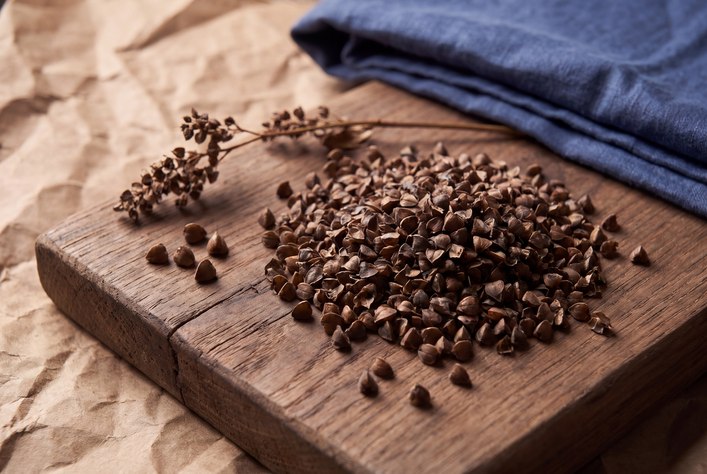
Where are buckwheat pillow hulls grown, and how many makers say?
10 of 25 buckwheat pillow makers whose product pages we read on 2026-11-11 say where their hulls are grown, and every row of that count is in the CSV file we publish. You can download it. Each answer can be checked against its own row.
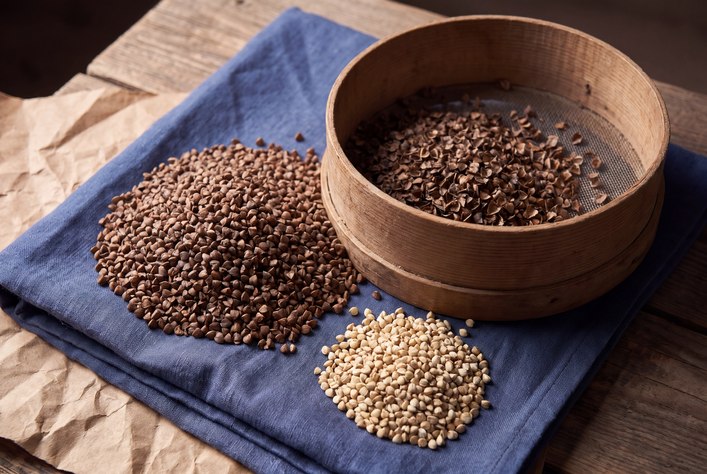
How are buckwheat hulls separated, sifted and cleaned before they fill a pillow?
Every hull in your buckwheat pillow started as the shell around a seed that someone wanted to eat. The food mill frees the hull, and a second cleaning run turns it into fill. This page follows the hull through both stages in order and tells you what each step removes.
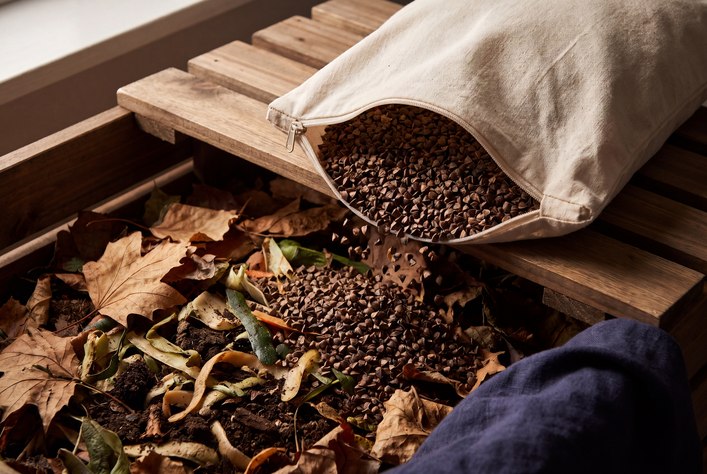
Can you compost the buckwheat hulls from an old pillow?
A standard bed pillow holds 6 to 7 lbs of hulls (Organic Cotton Plus on Amazon). None of that weight has to go in the trash. The hulls will compost, but slowly, because each hull is a hard shell that grew to protect a seed.
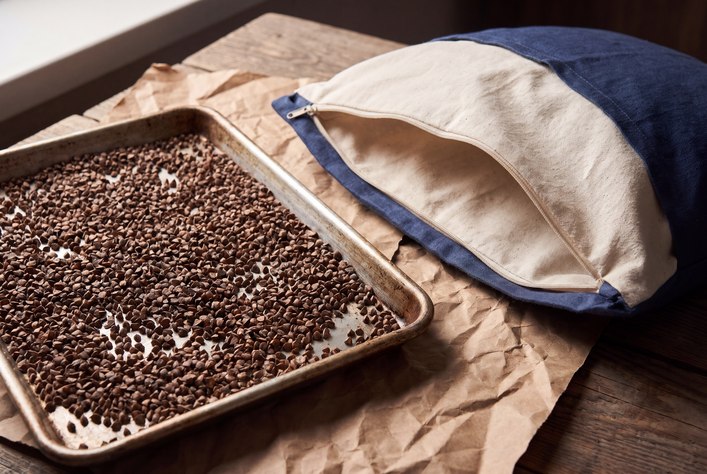
How do you clean a buckwheat pillow, and can the hulls ever get wet?
A buckwheat pillow is two things inside one zipped bag. One is a fabric cover that washes like any pillowcase. The other is a fill of loose hulls that should stay out of water. Cleaning means you keep them apart. If you wash both together, you ruin the pillow.
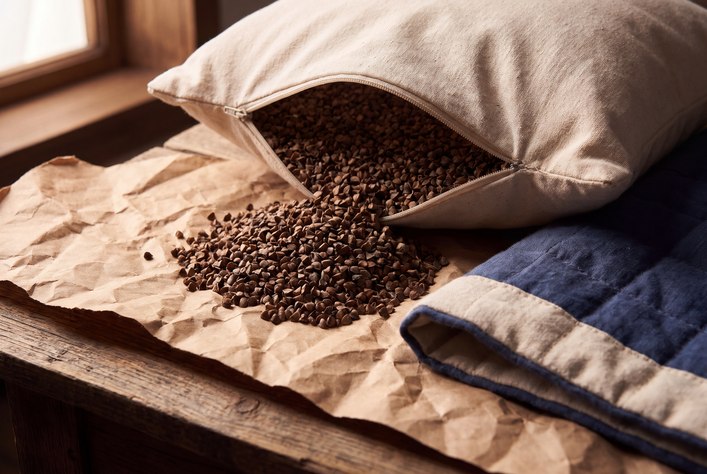
Why is my buckwheat pillow noisy, and who never gets used to it?
A buckwheat pillow makes a sound every time you move your head. The fill shifts when you shift, and you hear it happen. Most sleepers stop registering the sound inside a fortnight. A real minority never does, and that minority is large enough to check yourself against before you spend anything.
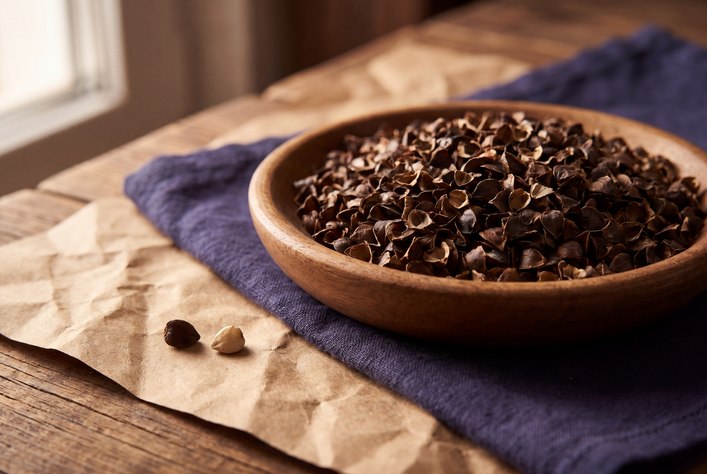
What is a buckwheat hull, and why does its shape matter?
A buckwheat pillow is mostly air, held open by a few thousand small hard shells. The shape does most of the work. Learn what those shells are and what shape they hold, and you can predict almost everything the pillow will do under your head.

How high must a pillow hold your head in each sleep position, and how do hulls keep that height?
A pillow's job in each sleep position is to fill one gap, and published research puts that gap near 10 centimetres on the side and 7 to 10 on the back. Your body sets the gap: shoulder width on the side, the hollow behind the neck on the back. Hulls matter here because they hold whatever height they are pushed into.
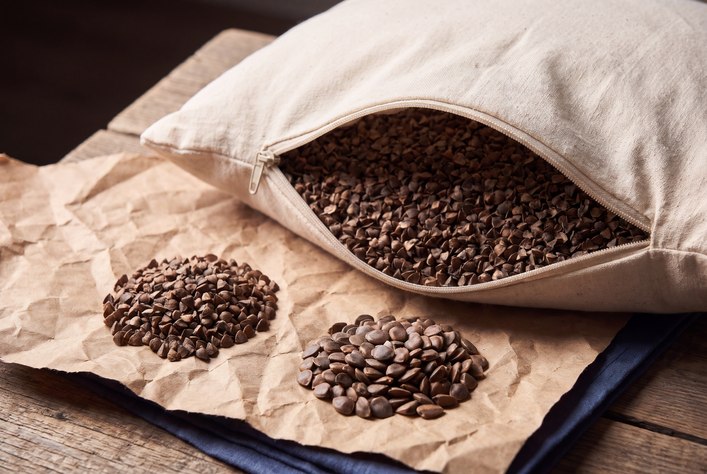
What does polishing change in a buckwheat hull?
Two bags of buckwheat hulls can look almost identical and still behave differently under a head. One rustles and locks. The other slides and whispers. The difference is usually a processing step called polishing, which happens long before the hulls reach a pillow case, and most listings never explain it.
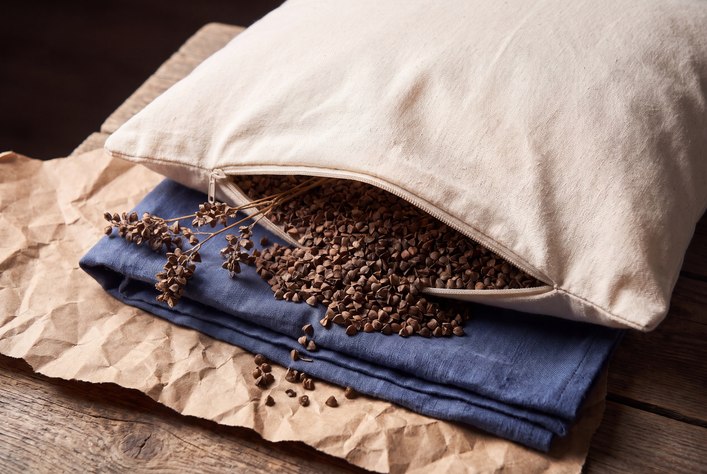
What makes a buckwheat pillow organic, from the field to the hull?
Most buckwheat pillows sold in the United States use the word "organic" somewhere, and it can mean three different things. On one page it describes the hulls, on another the cotton cover, and on some it describes nothing you can check. This guide traces the word from the farm to the finished pillow, using USDA rules, farm extension research and eight seller pages we read on September 25, 2026.
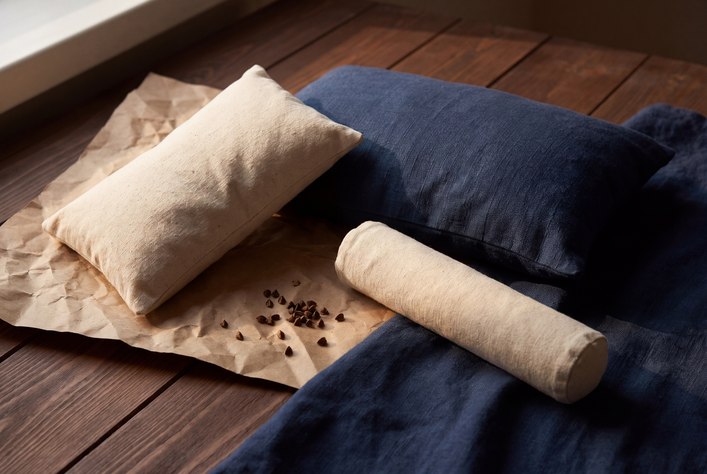
What is a Japanese buckwheat pillow, and how is it different from a US one?
In Japan a buckwheat pillow is a soba gara makura. The traditional one is much smaller than an American bed pillow. One Japanese pillow shop says the older standard size was about 14 by 20 inches, and that 43 by 63 cm is the main size today (Japanese pillow shop). A US standard pillow is 20 by 26 inches (PineTales). Most surprises come from that gap.
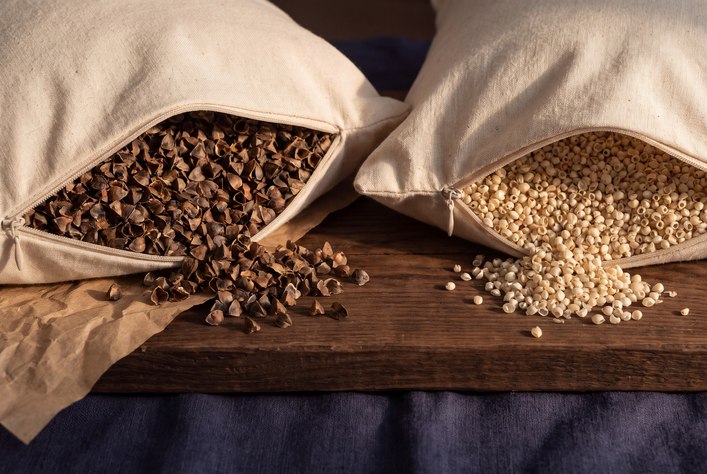
What changes when the hull changes from buckwheat to millet?
A buckwheat pillow and a millet pillow are built the same way, as a zippered case of loose seed hulls. Swap the hull and the pillow behaves differently under your head, because the two shells have different shapes. The weight barely moves. What a sleeper feels is the change in give, sound and air.
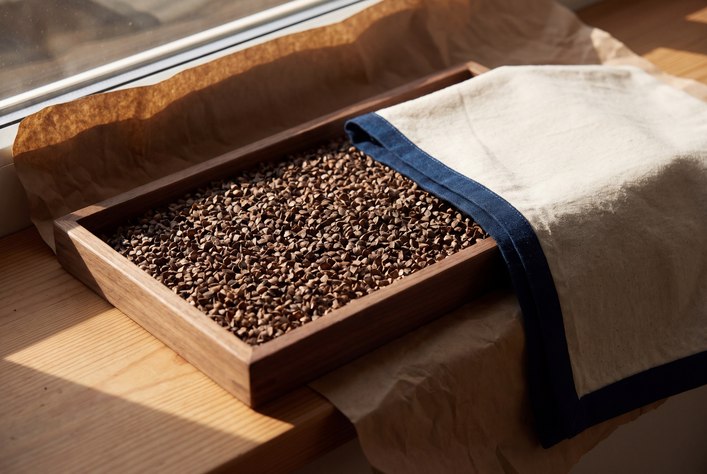
Can a buckwheat pillow get moldy or bring bugs into your bed?
Buckwheat hulls are the dry outer shells of buckwheat seeds, and like any stored plant matter, they can grow mold or host insects if they stay damp. Humidity is the number that decides it. Mold will begin to develop at a relative humidity of 65-70% on stored produce (FAO), and the EPA advises keeping indoor humidity below 60 percent, ideally between 30 and 50 percent (EPA). Most bedrooms sit below both lines.
What is the best buckwheat pillow?
Nearly every buckwheat pillow is a cotton case full of hulls with a zipper along one edge. The differences hide in the fine print, in answers to three questions. How many pounds of hulls go in? Where were they grown? Will the seller take the pillow back once you have slept on it? Those three facts settle most of the picks below.
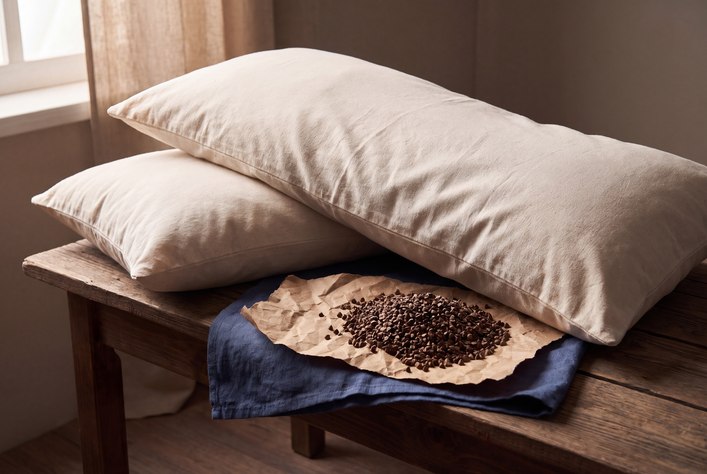
How much does a buckwheat pillow weigh, and why does the weight matter?
Sellers list a king size buckwheat pillow, 20 by 36 inches, at 10 to almost 18 pounds (Turmerry; PineTales). Turmerry's page puts a down or foam king at about 2 pounds. The weight has a job. It comes from the hulls, and the hulls are what hold your head up.